If you’re like me, you probably have a stack of books piled in your house somewhere, waiting patiently for you to pick them up and read them. And, also like me, maybe you can’t resist buying yet another one that catches your eye.
That’s where audio books come in. You can listen to a book while you clean the house, sit at soccer practice, or drive to work. Plus, you get the added benefit of listening to the voice actor perform the story, just for you. You can have a book anywhere you can plug in your earbuds.
Which brings me to my fun announcement. Protected, book one in my San Antonio series, is now available through Audible. Performed by the inestimable Christy Lou, the story is full of various voices and accents as she brings the characters to life.
Check it out on Amazon. Sit back, plug in those headphones, and relax.
Writing, as it turns out, it much harder than I expected. Placing words on the page isn’t so bad. Making sure they’re good … that’s where the difficulty begins.
Then, once the words are firmly entrenched on the page, after being critiqued, edited, deleted, rewritten, re-critiqued, and finally accepted, comes the getting-them-out-into-the-world part.
Hurdles abound.
An editor must bless your work of art. Hurdle number one.
Depending on where you submit your masterpiece, you may need an agent to clear the path before you. Hurdle number two.
You must convince the publishing company your story is worth their while to print. Hurdle number three.
And once your novel finally sees the light of day, you have to let people know it exists. Hurdle number four.
But, sometimes the stars align. Your future works out just the way God planned it. Sometimes magic happens.
I’m grateful the Blue Ridge Mountain Christian Writers chose my book, A Father’s Gift, as the third-place winner in the novella category of their 2023 Selah contest this week. Being in the top seven finalists was an honor, alongside such names as Hallee Bridgeman and Lynn H. Blackburn, much less earning the third-place spot. Congratulations to them both for their second and first place awards.
Edwina Perkins and Edie Melson, directors of the Blue Ridge Mountain Christian Writers Conference
I encourage all writers out there to persevere. Your story is important, and someone in this world needs to hear your words. And when it finally happens, please share your joy and excitement with the rest of us. We will be just as happy as you are, I promise.
One question asked every time I speak to a group of readers about my books is this:
How do you get your ideas?
https://www.bbc.co.uk/bitesize/articles/z78x2sg
My first book idea came from me creating a mash-up of my favorite novels, pulling bits and pieces from each, then finding a new platform from which to launch the conglomeration. Thus, Protected was born, and I introduced Abby and Manny to the world. From there, subsequent books tell the stories of the other people included in book one. Book two, A Father’s Gift, continues the story of my main characters in Protected, and book three, Accepted, (coming out in September, 2023), brings Manny’s best friend, Jonathan, and his story front and center.
Where did their stories come from? In my case, I believe the ideas for stories come from God. How can I weave a tale that shows ordinary people who survive their everyday problems and challenges to their faith? How can I share encouragement with readers to continue turning back to God if it doesn’t seem like he listens to our prayers?
I pray and wait for the ideas to come.
Many times, those ideas come while I’m in the shower. Does the spray of water massage my brain? Does steam break up whatever blocks my creativity? The answer is a mystery, but one that has repeated itself so many times, I now sometimes jump in the shower when I’m stuck and wait to see if inspiration strikes.
When I listen to music, often a story creates itself in the background as I sing along. Back when I still taught (math, by the way), I had what I thought was a wonderful idea for a writing assignment in the English classes. I’d been listening to my new Josh Groban CD (that tells you how long ago this happened—nobody buys CDs anymore). He sang in a foreign language, probably Italian. I couldn’t understand the words, but a very vivid picture emerged in my imagination based on the emotion in his voice and in the swells and lulls of the music. My pretend story made me curious—would other people hear something different? I wanted my friend Becky to let her students write what they “saw” by listening to the song.
I’ve learned to pay attention to those whispers. I pause, reel in my thoughts, and see if there is something I could turn into a novel. If I feel like the idea has legs, I jot it in a note saved on my phone for later. Sometimes those ideas nudge me. They seem eager to come to life. One book at a time for me, though. I’m not a writer who can have two or three projects going at once.
My favorite method of getting new ideas is when they come in a dream. Rarely can I keep a grasp on the tenuous threads that float through my mind in the dead of night. Three times, I attempted to recall the bones of the story after I woke up the next morning. Three times, the entire project vanished like the mist burning off in the light of day. I now force myself to jump out of bed and write it down. Those often feel totally ridiculous when I read them the next day. Instead of a story I can build up, I find myself staring at a scribbled description of something resembling a Mad Hatter’s party. Crumple that paper up and toss it in the trash.
But occasionally, the dream sequence is a kernel that puts down roots. I sit and ponder, and slowly, the idea blooms like a rose, each petal unfurling to reveal another trail in the story. That happened this week. I shared the idea with my Friday morning critique partners, and they agreed it would make a fun read. Cheryl remembered a contest she’d recently seen advertised and shared it with me. So now I have something to do with the story when I’ve polished the words, and they’re ready to go.
Creating that was fun. I’m so grateful I was in a place in my life in 2019 where I could retire from teaching and spend all my time writing. The pursuit is challenging and difficult, but ultimately rewarding. If you’ve ever considered writing, wait no longer. I’m happy to help you in any way I can. And if you are writing, share with the rest of us how you get your ideas.
Ann Boyles, congratulations! You’ll receive the copy of Best Choices from the People’s Pharmacy. Woohoo! Thank you for sharing your home remedies with me.
Have any of y’all reached a boiling point with doctors? No? Only me? There are tons of fabulous doctors out there, and I see some of them. But I’ve fired my share. (By fired, I mean muttered under my breath all the way to my car and refused to see them again.)
My biggest pet peeve with them is their tendency to turn straight to a prescription to eliminate a symptom I’ve described.
Hold your horses, Doc. Can we do some digging first to find out what causes the symptom?
My major problem is I’m a horrible pill taker.
First, I forget about them somewhere around the middle of day two, and consumption is spotty after that. Kind of hard for the pill to do its thing if it’s sitting in the little amber-colored bottle.
Second, if there is a side-effect, I’m going to experience it. Once I notice the effect, it’s all I can think about, which probably makes it worse. I’m a sympathy vomiter. The mere suggestion of throwing up makes it real.
So I turn to the internet. I can visualize all my doctor friends shaking their heads as they listen to me describe my fascination with and reliance on alternative medicine solutions. I know. I get it. Why would I believe my neighbor’s great-aunt’s solution over theirs? Theirs, that took many expensive years of medical learning and training to come by.
It comes down to this. I’ve lived decades in this body, and I pay attention to its signals. And when my doctor brushes that off as he reaches for his prescription pad, I get annoyed. So I’m going to explore first, thank you very much. If none of my alternative methods work, then I’ll come listen to what they offer.
Full disclosure: My experiment with essential oils once turned a basic UTI into a full-on, raging bladder infection. Antibiotics to the rescue. I acknowledge I don’t always make the best choice.
But I do have success stories I want to share with you. Some are downright weird and utterly inexplicable, but effective. At least, they were for me.
For rashes and bug bites, I use lavender essential oil. Basically, if it stings or itches, it gets doused. My five-year-old grandson disturbed a wasp nest in our treehouse. His screams brought me running. Angry insects circled with menace, and his tears told me he’d already been stung. I grabbed him and ran to the house. Four angry welts raised on his leg. I rubbed lavender oil on them, and within minutes (almost before I could screw the lid on the bottle and put it back on the shelf), he hopped down, tears gone, and headed back outside. I’ve been stung by a wasp before. The sting has the impact of a hammer. The rapid improvement in how he felt stunned me.
I also use lavender for burns. Blisters from the oven, or pain from a sunburn — both get lavender. Relief comes almost immediately.
I have another essential oil miracle. I complained to my doctor about muscle weakness, insomnia, dry skin—the list went on and on. She tested my thyroid. Turns out, it was hyperactive. My T3/T4 numbers should have been in a reference range of 1.0 – 4.0. Mine registered at 0.01. (“Hyperactive” and low numbers seem counterintuitive, but it makes sense when they explain it.) She referred me to a specialist. He wanted to do an iodine test to see how quickly my body processed the thyroid hormones. When I called to make the appointment for the test, the nurse explained his plan was to radiate my thyroid, basically killing off part of it. Problem was, if he killed off too much, the damage was permanent, leaving me with hypothyroidism which would require daily medication for the rest of my life. (Please refer back to the fifth paragraph.) Not only that, but I would be radioactive for the next two weeks. I’d have to eat off of different plates, wash my clothes separately, sleep in a different bed, not hold my grandbabies. No way, Jose. Off to the internet I went.
I found an essential oil recipe and rolled the mixture onto my throat three or four times a day. I planned to use the oils for six months, then let my doctor run the blood test again. However, I visited her for an unrelated issue three months later, and she asked me about the results from the specialist. I told her I was trying the oils first (hyperthyroidism wouldn’t kill me; I had time to explore). She cocked a skeptical eyebrow and challenged me to take the test right then and there. I shrugged. Okay. Let’s do it.
The next day she texted me, in all caps, with a bunch of exclamation points. “YOUR THYROID IS COMPLETELY NORMAL!!!”
Score another one for the alternative methods.
I ran across another one on TikTok. She said she oils her belly button at night before going to bed. According to her, rubbing oil in her navel will correct dry skin. (A handful of Indian women concur; I searched TikTok for verification that this was a thing.)
I have a container of whipped tallow, rendered from beef fat by a friend and scented with essential oils that I’ve been rubbing on my feet. I tried it in my belly button. My shins used to look like fish scales. Now, although my skin isn’t perfectly hydrated, it’s much better looking. I still see crepey wrinkles, but the scales are gone. And the insides of my leggings no longer look like my legs have dandruff when I take them off at night.
The weirdest cure came from my People’s Pharmacy book. Somewhere mid-menopause, I started experiencing charley horses in my calves in the middle of the night. The pain woke me, and I’d lurch from bed to stand and stretch the muscle. Sometimes it cramped so hard, I had to press my leg down with my hand on my knee to get relief. I dreaded falling asleep because I knew pain severe enough to yank me from slumber lurked right around the corner.
I told my doctor it must be hormone-related, because the only other time I’d experienced this problem was when I was pregnant. He told me hormones don’t cause cramps and prescribed a muscle relaxer.
I coached the swim team at my high school at the time and woke each morning at 4:00 a.m. No way was I taking a muscle relaxer every night. I’d never wake up. And did we not care to find out WHY my legs cramped?
Off to my favorite alternative medicine book I went—Best Choices from the People’s Pharmacy. I tried several things listed before I found one that worked. The rejects?
Eat a teaspoonful of yellow mustard when the cramps hit. Yuck. No effect.
Sip an ounce of pickle juice. Double-yuck. No results.
Take magnesium. Ho-hum.
Drink tonic water. Nothing.
The one that worked, immediately, and for evermore—place an unwrapped bar of soap under the bottom bedsheet, but don’t use Dove or Dial. The small flat bars you get at a hotel work perfectly. I’m totally mystified about how or why this works, but I never had another cramp again. So, take that, stupid muscle relaxers.
What weird thing works for you? I love learning these home remedies, and I’m eager to know yours. Book five in my San Antonio series will have Lawrence training to become a doctor. Since we’ll be in the 1870s, he won’t have access to our modern solutions. I need your answers for my research. So hit me up! I’ll draw from all the names who reply and will send one lucky winner a copy of the People’s Pharmacy book. Hopefully, it will bring you answers like it has for me.
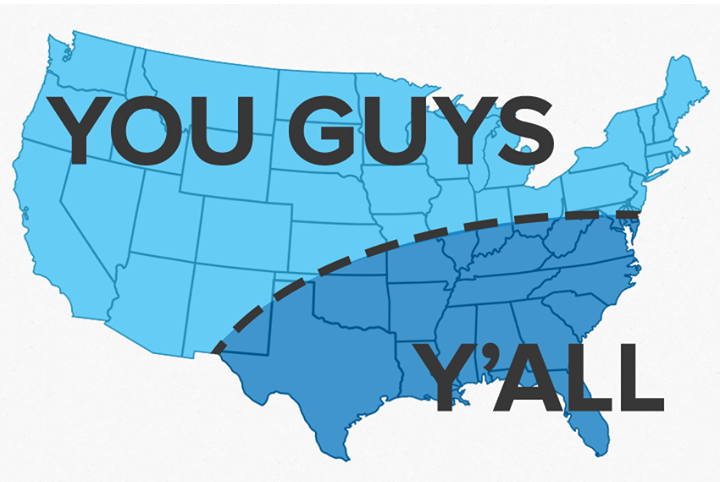
Many of my Northern friends have commented on my Texas accent. I don’t think I have one, at least not much of one, but they disagree. I think the difference often comes down more to the word choices we make rather than the sound of our voices.
For example, in the South we use the word “y’all.” It’s a contraction of “you all.” But rather than that harsh New Jersey sound (picture Joe Pesci in My Cousin Vinny), it has a nice Southern drawl to it.
We also call all soft drinks “coke,” as in, “I’m gonna get a coke. You want one? OK, what kind, Dr. Pepper or root beer?”
This little guy? He’s a doodle bug.
We use the word “tump,” as in, “Don’t swing so high on the swing set. You’re gonna make it tump over.”
And we won’t get into the argument of how to pronounce pecan.
Most of the time, my non-Texan friends and I communicate well, despite our differences. We may hide a grin behind our hands from time to time, but we understand each other. However, in the past few weeks, three words I consider commonplace have stumped my critique partners.
That makes me curious. One partner lives in Illinois and the other in the United Kingdom in the Forest of Dean (but was originally from Australia). Do they not know the words I use simply because of geography?
So I’m doing a survey. Without looking these words up (’cause that’d be cheating), post your answers in the comment section below and tell me what you think they mean. Then tell me where your parents raised you. (Technically, that should say where you were reared, but nobody actually says that word and it sounds weird.) Ready?
Percheron
cup towel
criminently
I can hear my grandmother’s voice on that last one, and it makes me smile. I’m eager to hear your definitions. If you have a word you think we won’t know down here, throw it in, too.
P.S. For those of you who have read and enjoyed Protected and A Father’s Gift, I have an update. I mailed the manuscript for book three, Accepted, to my publisher on Saturday. I hope the new book will be out by late summer/early fall. Squee!
I send short stories to a magazine on a regular basis. The editor-in-chief asked me to write a story about sports drinks. I don’t like the flavor, and they make me too jittery, so I’ve never been a fan. But I’d like to hear from others about drinks like Celsius, Monster, Red Bull, etc.
If you have consumed sports drinks, what was your experience like? Physical reactions? Addictiveness? Did you enjoy the flavor?
If you stopped drinking them, why?
I don’t want to influence your answer, so I’m not telling you who the magazine is or what slant I’m taking. I want to hear what you think and why.
They like the stories to come from a personal point of view, true stories, not fiction. I may quote you in the article. If you’d rather I didn’t, please let me know.
Ok, partners! Let’s do this. Hit me up with your answers and stories. Enquiring minds want to know.
Most of us skip right past the copyright page. (It actually has a name, which I didn’t know until today–it’s called a verso, and it should always be on the back side of your title page.) But writers needs to know about these little details, and this article, written by Dave Chesson from Kindlepreneur, does an excellent job of explaining it all.
Two cool things I learned: One, you can get a Library of Congress control number for free. This is necessary if you want your book shelved at a library. There is a link in the article above.
You can also add a CIP data block. A cataloging in publication data block is not necessary, but it can make your book look more professional. However, if you self publish, you’ll have to pay to get this assigned to your book. It’s really unneccesary unless you plan to market your book to libraries. So, since you’ll have to fork over anywhere from $60-$100, you may decide to let this one go. If you decide you just have to have this, you can apply for it at CIPblock.com.
In the writing word, cliches are frowned upon. They are a fallback for the lazy writer who cannot come up with something original to say.
And yet, one particular cliche has been on my mind since Tuesday night—don’t take life for granted.
Last Wednesday, October 19, my friend Stacy Simmons went in for a surgery to remove a growth from her abdomen. She had originally been told the surgery would take place in November, but somehow an opening had appeared in the schedule. Stacy posted how excited she was that Jesus had answered her prayers to do the surgery as soon as possible. The doctors didn’t think the growth was cancerous, but I can imagine Stacy wanted it out of her body. It probably felt like a ticking time bomb.
The surgery went well, and the doctor removed a 27-lb growth. Whew! What a relief that must have been. That’s like carrying triplets.
Tuesday morning, I texted Stacy to let her know I was thinking of her and had said prayers for quick healing and good results from the doctor on testing the growth.
Tuesday evening, I received this text in reply.
“This is her daughter. She passed away today from complications.”
I couldn’t process it. Had my phone been hacked? Hers? Surely this wasn’t real. Somehow, this was a horrible prank.
I scrolled back through my previous texts. I had definitely messaged Stacy’s phone. My text history was chock full of her typical encouragements.
“Wishing you all the best tonight. You’re gonna be awesome!!”
“Thank the Lord!! I’m so happy for y’all!!!”
“Holy smokes!!! That’s so amazing!!! I’ll be happy to tag team it with you.”
Her vibrancy and infectious enthusiasm shouted from my iPhone screen.
Had someone found her phone? Answered me this way to be terribly mean?
I called a mutual friend and asked her if she’d heard anything. Her tear-choked gasp told me my answer.
I looked at Stacy’s Facebook page.
There it was. A message from her family, confirming the news. “Due to complications from the surgery…”
What?
How was this possible?
Not Stacy.
Whether your religion teaches you the dead in Christ wake up sitting at his feet, or sleep until he returns, the dead person is immediately at peace. Stacy is fine. She’s either with or waiting for the Lord she loves.
But, oh. The rest of us.
This shock is too sudden. Too cruel.
I’m so glad I followed the prompting that urged me to send her that message. I’m grateful her family knew people loved Stacy and were concerned for her. How they wake up each morning and take their next breath with this sudden hole rent in the fabric of their lives, I cannot fathom.
So, back to the cliché … don’t take life for granted. Tell the people in your life you love them. Make the extra effort to spend time with your friends and family, even if it’s not particularly convenient for you. Tomorrow is not guaranteed for any of us.
And Stacy, please save us a seat. We’ll see you again one day.
The Blobfish lives in deep waters off the coast of Australia.
1) There is no such thing as normal.
What is normal for me may not be normal for you. When we chase the normal, we lose sight of the natural.
2) What you think is weird is really your superpower.
Your shyness, for example, might make you a better listener. Your awkward laugh might make you endearing. Our quirks, when we master them, contain great power.
3) What makes you weird makes you memorable.
Your true self, by its very nature, is captivating. People won’t remember the thing you did that everybody could do, but they will remember the thing you did that only you can do.
4) The world needs more authenticity.
We are all afraid to be the first one. When you start living as your true self, weirdness and all, you give permission to those around you to do the same. We might not say it out loud, but everyone wants to see your honest self.
5) All great art was made by weird people.
Embracing your weirdness gives you a new perspective, and the world needs a new perspective. Innovation happens when outsiders challenge the status quo with weird ideas.
6) Resisting your weirdness makes you dark.
Hiding our unique characteristics and resisting our natural self makes us feel less good and makes our personalities darker. Just like a black hole results from the absence of a star, so also the resistance to our unique qualities, however weird, results in a dark and inverted projection of self.
7) Standing out is how you find your tribe.
Standing out will not make you lonely—far from it. By living honestly, you will discover others who align with your weirdness. This is your tribe.
After spending nineteen years in a classroom, I’ve grown to appreciate weird. Today, I especially appreciate Weird Al Yankovic.
Really? you might ask.
Really. Let me set the stage.
In 2013, Robin Thicke wrote a song titled “Blurred Lines.” It won the MTV Video Music award for Best Song of the Summer.
I loved it. It’s catchy, upbeat. Makes me want to dance.
And I hated it.
The lyrics are horrible. Demeaning. Sexist. Misogynistic. The video combines live action with all that, and it makes me sick.
Obviously, I couldn’t listen to that song. Couldn’t enjoy it.
But, thanks to Weird Al, now I can.
Now, instead of women dancing—no, writhing is a better term—we see punctuation bebopping.
The lyrics are no longer sexist. They’re funny. They’re a notch above. They’re intelligent.
Watch this video, then I’ll explain why the writer/editor in me particularly appreciates what Weird Al has done.
Word Crimes
Less versus fewer
Less versus fewer
A very common mistake among authors. Less refers to things that are not easily counted, but instead are measured, as in “less time” or “less effort.” Fewer is used to describe things you can count, as in “fewer choices” or “fewer problems.”
I could care less.
People say this when they mean they don’t care. But if you could care less, then you must care a little, or there’d be nowhere less to go.
Your versus you’re
If you’re unclear about when to use your versus you’re, just find an argument on Twitter. Someone, somewhere, will use it incorrectly and the next nineteen tweets will be all about how wrong they are and will explain, with derision dripping from every letter, exactly how to use them both.
Its versus it’s
It’s a quirk of the English language. Apostrophes are used to show possession (Sophie’s choice, A Bug’s Life). But they’re also used to make contractions. Its is the anomaly. Its job is to show possession, but without the apostrophe.
Dangling participle or modifier
This one is in my top five favorites. It’s so easy to do, and not so easy to catch. The phrase at the beginning of the sentence (the modifier or participle) must describe the subject of the rest of the sentence. In this example, “After finishing a drink” must describe what comes next. But what comes next is the bartender. We left the modifier dangling in the wind.
Oxford comma
Another subject sure to stir up an hours-long Twitter argument is the Oxford comma. I, personally, am on Team Oxford. Not everyone agrees.
Homophones
Homophones are words that sound the same but are spelled differently. I’ve recently seen both of these in work I edited (one was my own!)
He leaned over the railing, wretching miserably. (should be retching)
The sound of morning doves filled the air. (should be mourning)
These are particularly pernicious because your spell check won’t catch them.
Who vs whom
“Who” is used when it’s the subject of the sentence. “Who was at the door?”
We use “whom” when it is the object, which we’re used to seeing in a prepositional phrase. “Never send to know for whom the bell tolls; it tolls for thee.”
An easy test is to replace the word with he or him. If it makes sense when you say “he,” use “who.” If “him” works best, use “whom.” Try it. He was at the door. Never send to know for him the bell tolls. (Okay, not as obvious with whom, but using “he” always works.)
And we’re all going to pretend we didn’t notice the two (maybe three–my mind may be in the gutter on that third one) sexual innuendos.
Thanks, Weird Al, for making it okay for me to enjoy this song.