Dog Days of Summer

I used to think us Texans reserved the right to complain about the heat July through August. Unfortunately, it seems to have spread. More and more of us are rearranging our lives to spend as little time outdoors as possible, and get everything done that absolutely must occur outside before 9:00 a.m.

I’ve always thought of those extra-hot days as the dog days of summer. However, turns out I was wrong. Or at least a little off target.

You keep using that word. I do not think it means what you think it means.

I thought the dog days described the hottest days, which in Texas is the entire month of August. The use of “dog days,” I assumed, came from the fact that dogs lay about all sprawled and lazy when it’s hot.

Dogs DO sprawl on their back to let heat escape from their exposed belly, but that’s not where the name comes from. It’s astronomical (as in, astronomy, not ginormous). These hot summer days are named after the star Sirius, which is the brightest star in our sky (except for our Sun, of course). Sirius holds a place in the constellation Canis Major, which is Latin for “great dog.” When Sirius (the Dog Star) rises before the sun, that time of year is typically mid- to late-summer. Ancients watched for the appearance of Sirius in the dawning sky to know when the flooding of the Nile River would commence.

So the dog days of summer are tied to the Dog Star, not the behavior of our favorite pets.

Be that as it may, regardless of what we call this period of summer, it’s HOT. This is when my lawn turns brown and the grass gets crunchy. This is when people post pictures of baking cookies or dehydrating fruit inside their cars or frying eggs on their sidewalks. The asphalt in our roads melts, and the sticky sound of the tires on your car as they roll along the road is audible.

So what’s a person to do? Going outside invites a heat stroke. How can we pass our time comfortably ensconced indoors with our AC blowing and every ceiling fan in the house turned on rocket speed? Read a book, of course! And I have a great recommendation for you. It even has the word “summer” in the title, so you can experience the great outdoors vicariously while you read.

What book do I refer to? The Best Summer of Our Lives, written by Rachel Hauck. Here is the blurb from the back of the book:

“Twenty years ago, the summer of ’77 was supposed to be the best summer of Summer Wilde’s life. She and her best friends, Spring, Autumn, and Snow–the Four Seasons–had big plans.

But those plans never had a chance. After a teenage prank gone awry, the Seasons found themselves on a bus to Tumbleweed, “Nowhere,” Oklahoma, to spend eight weeks as camp counselors. All four of them arrived with hidden secrets and buried fears, and the events that unfolded in those two months forever altered their friendships, their lives, and their futures.

Now, thirtysomething Summer is at a crossroads. When her latest girl band leaves her in a motel outside Tulsa, she is forced to face the shadows of her past. Returning to the place where everything changed, she soon learns Tumbleweed is more than a town she never wanted to see again. It’s a place for healing, for reconciling the past with the present, and for finally listening to love’s voice.”

Ooh, there is so much nostalgia written into this story. And when you have chapter titles like “We Can Work It Out,” and “One More For the Road,” the memories of your own best summer with best friends open up and flood your mind.

Rachel had these things to say about writing in general.

PP: Which of your books was your favorite one to write?

RH: Wow, great question. I’ve been sitting here thinking of “which one,” and I can’t say I have a favorite. All of them were fun … until I started writing. Ha! Then reality set in and I had to do the work to find the best story. I guess I’ll say this: my favorite book is the one I’m thinking of next. The creative, inspirational stage is the best. But putting it down on paper is hard.

PP: What has been the most fun part of being a successful writer?

RH: In 2012, I wrote a “bucket list” for a blog I was a part of. In truth, it was more of an impossible list. One of my four things was to “hit the New York Times.” Well, there’s no way I could make that happen on my own. But getting the call from my publisher and hearing, “Rachel, you’re a New York Times bestselling author,” was pretty darn fun.

PP: What has been the biggest challenge about being a successful writer?

RH: As with all success or failures in life, I can’t let them define me. I keep focused on my family and friends, my relationship with the Lord and who He says I am. Writing, at the end of the day, is my job. I love having success, but I don’t let it define me. The year I hit the New York Times, I knew the next year might be slow, quiet, and possibly with no accolades. I determined to cheer on the author who was succeeding, getting the awards and the bestseller.

PP: When you have time to read for pleasure (not reading to keep up on trends in your genre … just for you), which author is your go-to?

RH: I don’t have a go-to author. Rather, I like stories. If the story appeals to me, I’ll read it even if I’ve never read the author before. Of course, over time there are some authors I know will tell a good story every time, but for me it’s about the story itself.

PP: If money was no object, and you had no chance of failure, what would you like to do (other than writing)?

RH: Ooo, I’d love to be one of the sideline reporters for college football.

PP: If you discovered you had one year to live, what three things would rise to the top of your to-do list?

RH: 1. Spend time before the Lord in prayer and worship. 2. Do what He tells me to do. 3. Spend time before the Lord in prayer and worship.

It’s gonna be hot for the next several weeks. Fix yourself a tall glass of iced tea, grab a copy of The Best Summer of Our Lives, and settle in. And enjoy. You can thank me later for the recommendation.

https://amzn.to/45frnLp

Everyone who comments or shares this will be entered into a drawing to win your own copy of Rachel’s book. Good luck!

And the winner is Lee Carver!

A Thing which seemed very Thingish inside you is quite different when it gets out into the open ~ Pooh

One question asked every time I speak to a group of readers about my books is this:

How do you get your ideas?

https://www.bbc.co.uk/bitesize/articles/z78x2sg

My first book idea came from me creating a mash-up of my favorite novels, pulling bits and pieces from each, then finding a new platform from which to launch the conglomeration. Thus, Protected was born, and I introduced Abby and Manny to the world. From there, subsequent books tell the stories of the other people included in book one. Book two, A Father’s Gift, continues the story of my main characters in Protected, and book three, Accepted, (coming out in September, 2023), brings Manny’s best friend, Jonathan, and his story front and center.

Where did their stories come from? In my case, I believe the ideas for stories come from God. How can I weave a tale that shows ordinary people who survive their everyday problems and challenges to their faith? How can I share encouragement with readers to continue turning back to God if it doesn’t seem like he listens to our prayers?

I pray and wait for the ideas to come.

Many times, those ideas come while I’m in the shower. Does the spray of water massage my brain? Does steam break up whatever blocks my creativity? The answer is a mystery, but one that has repeated itself so many times, I now sometimes jump in the shower when I’m stuck and wait to see if inspiration strikes.

https://brightside.me/wonder-curiosities/why-our-best-ideas-come-to-us-in-the-shower-799039/

When I listen to music, often a story creates itself in the background as I sing along. Back when I still taught (math, by the way), I had what I thought was a wonderful idea for a writing assignment in the English classes. I’d been listening to my new Josh Groban CD (that tells you how long ago this happened—nobody buys CDs anymore). He sang in a foreign language, probably Italian. I couldn’t understand the words, but a very vivid picture emerged in my imagination based on the emotion in his voice and in the swells and lulls of the music. My pretend story made me curious—would other people hear something different? I wanted my friend Becky to let her students write what they “saw” by listening to the song.

I’ve learned to pay attention to those whispers. I pause, reel in my thoughts, and see if there is something I could turn into a novel. If I feel like the idea has legs, I jot it in a note saved on my phone for later. Sometimes those ideas nudge me. They seem eager to come to life. One book at a time for me, though. I’m not a writer who can have two or three projects going at once.

My favorite method of getting new ideas is when they come in a dream. Rarely can I keep a grasp on the tenuous threads that float through my mind in the dead of night. Three times, I attempted to recall the bones of the story after I woke up the next morning. Three times, the entire project vanished like the mist burning off in the light of day. I now force myself to jump out of bed and write it down. Those often feel totally ridiculous when I read them the next day. Instead of a story I can build up, I find myself staring at a scribbled description of something resembling a Mad Hatter’s party. Crumple that paper up and toss it in the trash.

https://www.middleeasteye.net/discover/dreams-middle-east-civilisation-how-helped-define

But occasionally, the dream sequence is a kernel that puts down roots. I sit and ponder, and slowly, the idea blooms like a rose, each petal unfurling to reveal another trail in the story. That happened this week. I shared the idea with my Friday morning critique partners, and they agreed it would make a fun read. Cheryl remembered a contest she’d recently seen advertised and shared it with me. So now I have something to do with the story when I’ve polished the words, and they’re ready to go.

Creating that was fun. I’m so grateful I was in a place in my life in 2019 where I could retire from teaching and spend all my time writing. The pursuit is challenging and difficult, but ultimately rewarding. If you’ve ever considered writing, wait no longer. I’m happy to help you in any way I can. And if you are writing, share with the rest of us how you get your ideas.

Need a book to read? Oh, wait. The answer to that is ALWAYS yes.

I have one to suggest. My friend, Dreena Collins, recently published And Then She Fell. Not only is the book super interesting, it’s written exceptionally well. Here is the review I left on Goodreads.

And Then She Fell by Dreena Collins

My rating: 5 of 5 stars

I knew in the first few pages this book was going to be great. Dreena writes prose as if it is poetry. Such perfect turns of phrase, all through the book.

Example:

“You will see our new fences,” he said. “Very safe.”

The word ‘safe’ formed and hovered in the air. It stayed near him. Did not quite reach me.

Another:

We were still like concentric circles. You were at the heart of me. Focal. Vital.

You learn in chapter one the book is in the POV of a grieving mother who is trying to discover what really happened when her daughter died. Each chapter reveals another detail, and you think, “Aha! It was you!” But the next chapter turns that on its ear. When you finally realize the truth, your heart will break. I finished this book two weeks ago, and it still pops into my mind throughout the day.

I enjoyed this book so much, I want you all to read it too. In fact, if you’ll share this post with your friends (tag me!), I’ll put your name in a drawing to win my copy. I’m happy to pass it along and share the wealth. And if you don’t win, get your own copy. You’ll be so glad you did.

What does all that information on the copyright page mean?

Most of us skip right past the copyright page. (It actually has a name, which I didn’t know until today–it’s called a verso, and it should always be on the back side of your title page.) But writers needs to know about these little details, and this article, written by Dave Chesson from Kindlepreneur, does an excellent job of explaining it all.

Two cool things I learned: One, you can get a Library of Congress control number for free. This is necessary if you want your book shelved at a library. There is a link in the article above.

You can also add a CIP data block. A cataloging in publication data block is not necessary, but it can make your book look more professional. However, if you self publish, you’ll have to pay to get this assigned to your book. It’s really unneccesary unless you plan to market your book to libraries. So, since you’ll have to fork over anywhere from $60-$100, you may decide to let this one go. If you decide you just have to have this, you can apply for it at CIPblock.com.

Check out Dave’s article. I learned a lot.

So hard to say goodbye

In the writing word, cliches are frowned upon. They are a fallback for the lazy writer who cannot come up with something original to say.

And yet, one particular cliche has been on my mind since Tuesday night—don’t take life for granted.

Last Wednesday, October 19, my friend Stacy Simmons went in for a surgery to remove a growth from her abdomen. She had originally been told the surgery would take place in November, but somehow an opening had appeared in the schedule. Stacy posted how excited she was that Jesus had answered her prayers to do the surgery as soon as possible. The doctors didn’t think the growth was cancerous, but I can imagine Stacy wanted it out of her body. It probably felt like a ticking time bomb.

The surgery went well, and the doctor removed a 27-lb growth. Whew! What a relief that must have been. That’s like carrying triplets.

Tuesday morning, I texted Stacy to let her know I was thinking of her and had said prayers for quick healing and good results from the doctor on testing the growth.

Tuesday evening, I received this text in reply.

“This is her daughter. She passed away today from complications.”

I couldn’t process it. Had my phone been hacked? Hers? Surely this wasn’t real. Somehow, this was a horrible prank.

I scrolled back through my previous texts. I had definitely messaged Stacy’s phone. My text history was chock full of her typical encouragements.

“Wishing you all the best tonight. You’re gonna be awesome!!”

“Thank the Lord!! I’m so happy for y’all!!!”

“Holy smokes!!! That’s so amazing!!! I’ll be happy to tag team it with you.”

Her vibrancy and infectious enthusiasm shouted from my iPhone screen.

Had someone found her phone? Answered me this way to be terribly mean?

I called a mutual friend and asked her if she’d heard anything. Her tear-choked gasp told me my answer.

I looked at Stacy’s Facebook page.

There it was. A message from her family, confirming the news. “Due to complications from the surgery…”

What?

How was this possible?

Not Stacy.

Whether your religion teaches you the dead in Christ wake up sitting at his feet, or sleep until he returns, the dead person is immediately at peace. Stacy is fine. She’s either with or waiting for the Lord she loves.

But, oh. The rest of us.

This shock is too sudden. Too cruel.

I’m so glad I followed the prompting that urged me to send her that message. I’m grateful her family knew people loved Stacy and were concerned for her. How they wake up each morning and take their next breath with this sudden hole rent in the fabric of their lives, I cannot fathom.

So, back to the cliché … don’t take life for granted. Tell the people in your life you love them. Make the extra effort to spend time with your friends and family, even if it’s not particularly convenient for you. Tomorrow is not guaranteed for any of us.

And Stacy, please save us a seat. We’ll see you again one day.

It’s a long way to Dallas.

I served on a federal jury several years ago. I didn’t even mind because it got me out of my classroom for three weeks, and it was a particularly tough year. I wrote some musings about my experience once the trial was over. A friend reminded me of that collection of thoughts the other day. So, here is a resurrection of my memories of that good ol’ time. Enjoy.

Things I learned while on jury duty:

  1. It is a long way to Dallas.
  2. It pays to be nice and make friends. I left my purse at home one morning, and Pedro, the attendant of the lot I used each day, let me park my truck there for free until I could find someone to borrow the money from.
  3. Women in Dallas have only one toe, and it is right in the middle of their feet. I know this to be true because of the pointy-toed, spike-heeled shoes they wear. There is not room in those shoes for more than one toe.
  4. Reading glasses make a very effective crowd-control tool when used correctly. I learned from observing Judge Lynn if you perch them right on the end of your nose and glare menacingly over them, you don’t have to actually say anything. This maneuver is particularly effective on jurors who return late from lunch (not me!).
  5. It is a very long way to Dallas.
  6. You can ride the train to Dallas, but you must be at the Vickery Street station at 6:15 am to get to the courtroom on time.
  7. If you walk around the Vickery Street train station at 3:30 pm to familiarize yourself with everything so you won’t miss the train the first time you ride it the next day, you’ll feel like you’ve just stumbled into the Stephen King book The Stand, because there will be no one around but you.
  8. Walking around in a marble-floored, high-ceilinged, empty train station building in broad daylight is creepy.
  9. If you pee against the protective shelter while waiting for the train (not me!), the train conductor, who spies you doing this while he waits for the scheduled time to head to DFW airport, will not be happy and he will call the Transit Police. The Transit Police will come and take you off the train while everyone else looks on, handcuff you, and take you away.
  10. Riding the train was not as much fun as it was cracked up to be, despite it being a very, very long way to Dallas.
  11. The Spanish word for before is antes (pronounced “awn-tez”).
  12. The Spanish word for after is despues (pronounced “dez-pwez).
  13. The Spanish word for tools is heramienta (pronounced “air-raw-may-en-ta”).
  14. The Spanish word for cocaine is cocaine (pronounced “co-cah-een-ah”).
  15. The Spanish word for heroin is chivas (pronounced “shee-vas”).
  16. The Spanish word for well, as in, “Well, when you spoke to the FBI, you lied to them, didn’t you?” is bueno (pronounced “bway-no”).
  17. The Spanish word for o.k., as in, “O.K., let’s look at your testimony again,” is bueno (pronounced “bway-no”).
  18. The Spanish word for good, as in “Good, we’ve established that you lied to Mr. Delapaz,” is bueno (pronounced “bway-no”).
  19. The Spanish word for no (duly reported and translated each and every time) is no, (pronounced “no”).
  20. You can get a crick in your neck driving for 30 minutes along I-30, trying the whole while to position your head in just the right spot behind your rear-view mirror so you don’t have the sun glaring straight into your eyes. This, however, is an advantage when you walk around at lunch as it forces you to hold your head at a snooty, self-important angle, which lets you fit right in.  It also helps if you’re wearing pointy-toed, spike-heeled shoes.
  21. The Seinfeld “Soup Nazi” now lives in Dallas and owns a Greek restaurant two blocks from the courthouse. Be ready with your order when it is your turn and, whatever you do, do not ask a question about the menu.
  22. Courtrooms are very cold.
  23. Blankets, coats, and mittens are allowed in courtrooms.
  24. Cell phones are not allowed in courtrooms.
  25. You can sneak your cell phone past the security guard on the fifteenth floor if you keep it in your coat pocket (accidentally, of course) if you wait until there are several important attorneys all trying to get through at the same time you are.
  26. It is a very, very, very long way to Dallas.
  27. It is extremely hard to not watch the news, read the paper, or listen to NPR (even if you don’t normally do so) when someone tells you not to.
  28. It is extremely hard not to talk about something that totally consumes your every waking moment for three weeks.
  29. It is imperative to not wear pants that have become ever-so-slightly too small for you when you are forced to sit still for eight hours.
  30. A certain lethargy steals over your body around 1:30 – 2:00, forcing your eyes to flutter as you valiantly fight to stay awake. This will happen every day, like clockwork, and will last approximately 20 minutes. It will also earn you a glare from over the reading glasses.
  31. Vitamins, a Gingseng-Gotu Kola capsule, and an Arizona Energy tea at lunch will help combat the early afternoon nap syndrome but will not completely alleviate it.
  32. Wiggling around a lot will help you stay awake.
  33. Tapping your knuckles repeatedly—and hard—with your pen will help you stay awake, although it tends to annoy jurors sitting next to you.
  34. Chewing the inside of your cheek will help you stay awake.
  35. Taking a water bottle in with you and drinking from it will help you stay awake.  Unfortunately, you only get one bathroom break after lunch, so this maneuver has its pitfalls.
  36. Frowning with intense concentration and looking back and forth between witnesses, interpreters, and attorneys will help hide the fact that your eyes are fluttering.
  37. Listening to a trial where you learn the names of a lot of Hispanic people—many of whom have the same first name; many of whom also have a nickname; many of whom have two last names, either of which might be used by any given witness at any given time—is sort of like reading a Tom Clancy novel.
  38. Making a flow chart helps keep everyone straight. It can also be recopied each day from 1:30 – 2:00 to keep you awake.
  39. Being a teacher gives one excellent practice at picking out when someone starts to lie.
  40. Swearing to tell the truth, the whole truth (we don’t say, “so help you God” anymore) doesn’t have the effect one would expect on the veracity of testimony given.
  41. Lawyers aren’t necessarily good at math. We waited a moment or two for our prosecuting attorney to do mental math and figure out what 30 kilos times $20,000/kilo is.
  42. Jurors are not permitted to call out answers.
  43. It’s an extremely long way to Dallas.
  44. Restating a question five times by changing the first few words will not magically make a different answer come from the witness’s mouth. For example,
    1. “Mr. S, you were afraid of R. A., weren’t you?”
    2. “But isn’t it true, Mr. S, that when you found out E. A. and J. R. were going to set up R. A., you got scared?
    3. “But in your grand jury testimony, Mr. S, when you said, ‘Are you crazy?’, it was because you were afraid of setting up R. A., a known drug dealer, wasn’t it?”
    4. “But Mr. S, didn’t you walk out of J. R.’s apartment that night because you were afraid of R. A.?”
    5. “You were frightened of setting up a known drug dealer, weren’t you, Mr. S.?”
  45. Witnesses, even when they are self-confessed drug dealing, conspiring, scam artists, can be funny and smart-alec when they answer, “For the fifth time, dude, the answer is no.”
  46. Jurors who snort with laughter at funny, smart-alec answers made by self-confessed drug dealing, conspiring, scam artist witnesses will earn themselves a glare over the reading glasses.
  47. Jurors are not allowed to make objections, even when a question has been re-asked five times and answered the same way each and every time.
  48. Jurors from Mississippi use the phrase, “He musta been fed with a sling-shot when he was a baby,” to describe very focused, intense, no-nonsense attorneys who repeat questions five different times in an effort to wring out a “yes” from the witness.
  49. Never, ever, ever take your car to an auto repair shop that has any of the following characteristics:
    1. It is made of corrugated tin.
    2. It consists mostly of a field, a fence, and a shed.
    3. It looks like it has been repainted several times with very brightly colored paint.
    4. There aren’t many cars sitting around waiting to be fixed or cleaned, and the people running it don’t look very busy.
    5. There is a pick-up truck parked anywhere across the street with a person using binoculars sitting in it, watching.
  50. In fact, never, ever, ever take your car to be fixed anywhere besides Christian Brothers Automotive or Pep Boys, just to be on the safe side.
  51. When people get busted in a drug raid, everyone there gets busted, so don’t ever, ever, ever take your car anywhere to be fixed other than Christian Brothers Automotive or Pep Boys.
  52. It’s okay to use the f- word in a courtroom, and it won’t even earn a glare over the reading glasses.
  53. It’s sort of creepy to sit five feet away from a drug dealer and watch him get mad and start using the f-word when the defense attorney hammers away at his testimony.
  54. It’s a long way to Dallas.

It Takes a Village

One thing the Bible teaches us is God made us to live in community. The writing community is no different. We have author friends who have already walked the path we’re now on ourselves, and they are more than willing to lend a helping hand. That support is both crucial and encouraging.

Toni Shiloh is one such author. She speaks to writing groups to help bring along new and learning authors. She spoke to our DFW chapter this month about writing with diversity. Her topic is something we all need to learn and honor.

Toni also posts each Friday on her blog, Toni Shiloh – Soulfully Romantic, where she promotes new publications. She included both of my Christmas anthologies on this week’s post, along with others. You can read it here. https://tonishiloh.com/2021/10/15/friday-reads-10-15-21/

Feel free to browse! There are several to choose from. You may find something that piques your interest, and may also find some Christmas gifts. Enjoy. And, thanks, Toni!

I Need Your Help!

I am planning a launch party for my second Christmas anthology book (available October 12 on Amazon). I was invited to take part in the collection with Texas authors Jessica White and Sara Meg Seese. We titled the book Texas Heirloom Ornament, and it chronicles the stories of three generations of Texas women. Each story takes place around Christmas.

The first one, In Small Things Liberty, is set in 1923. Following is In Large Things Unity, which takes place in 1972. The collection wraps up with the third novella, In All Things Charity, in 2015. An heirloom Christmas ornament connects the three women in the stories as they pass it down from generation to generation. There is also just the slightest thread of feminism as each heroine deals with challenges from her particular era.

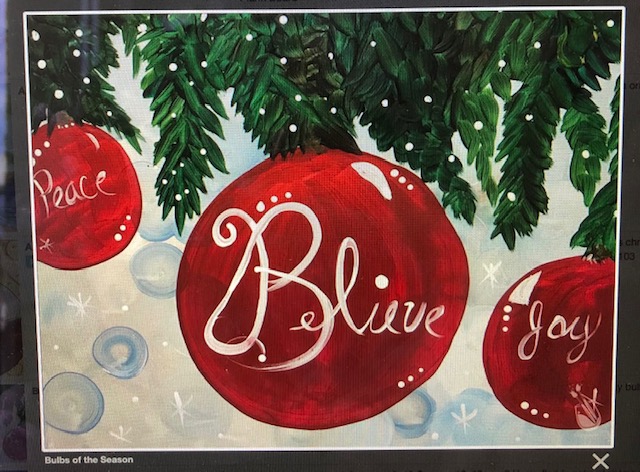
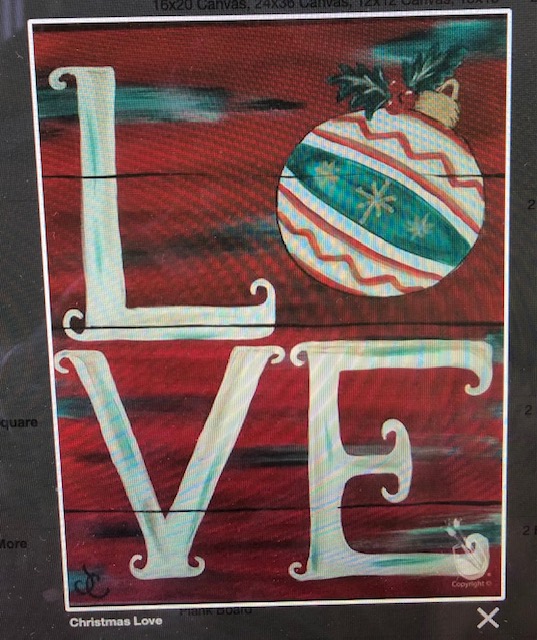
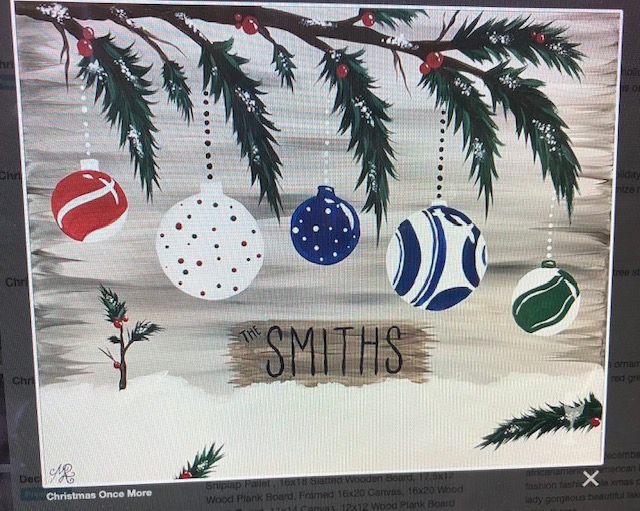
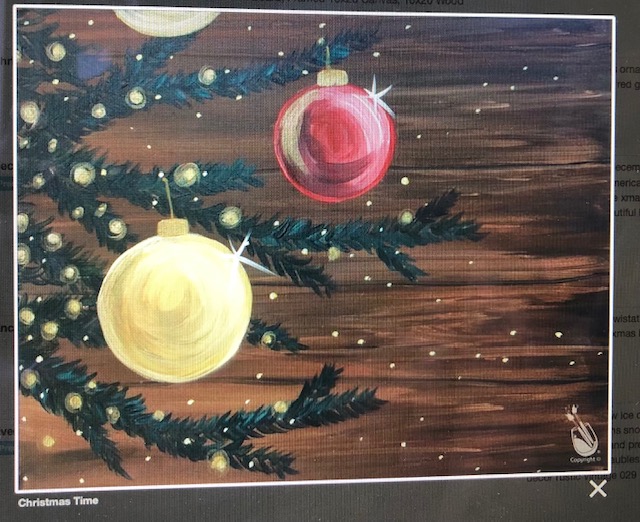
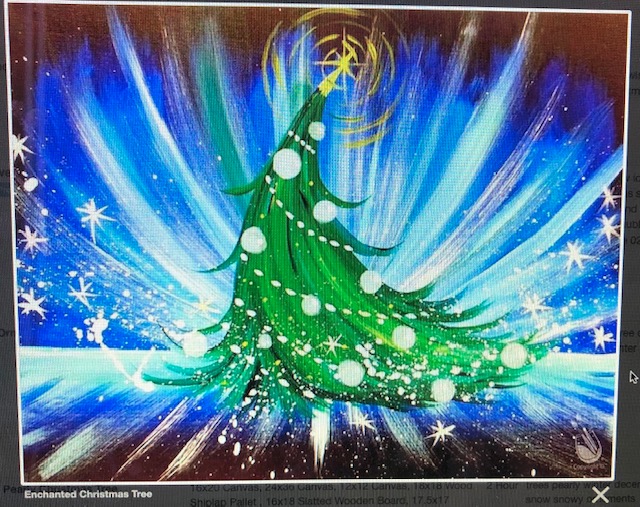
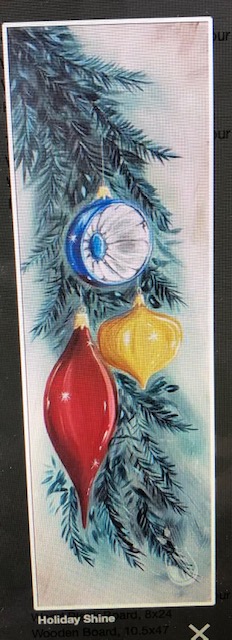
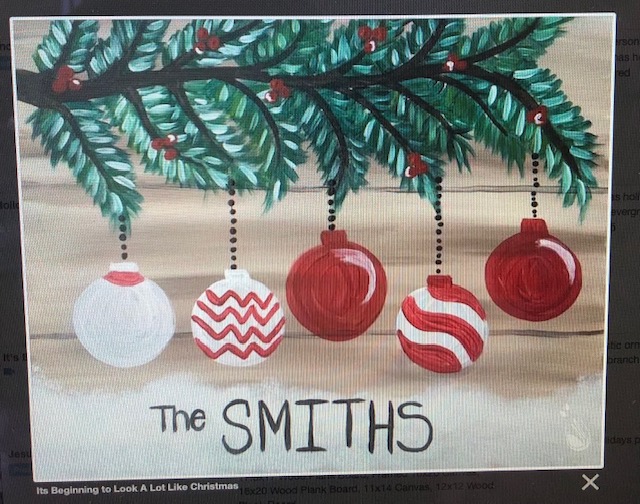
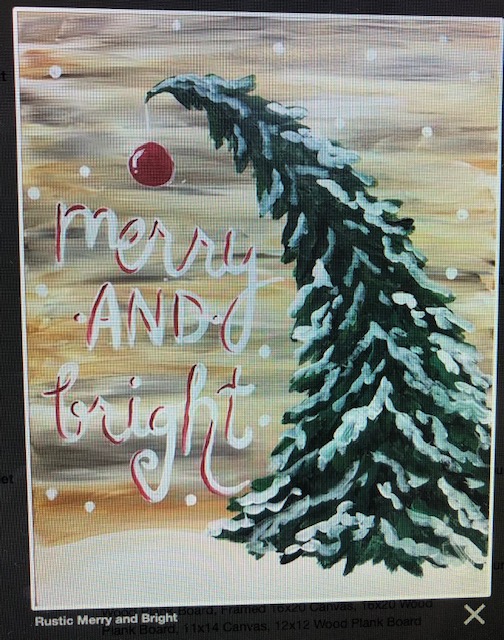
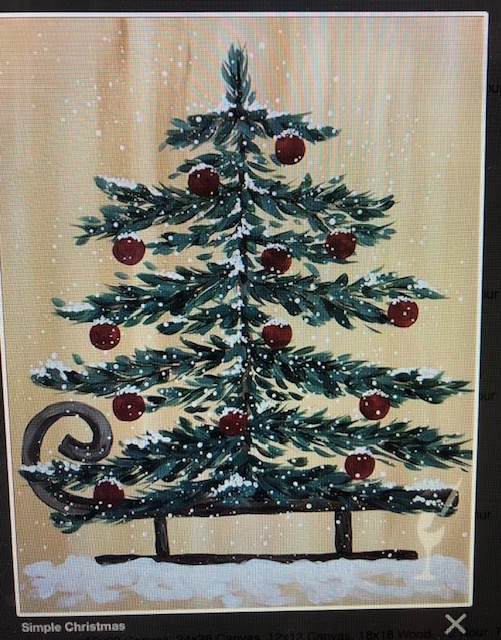
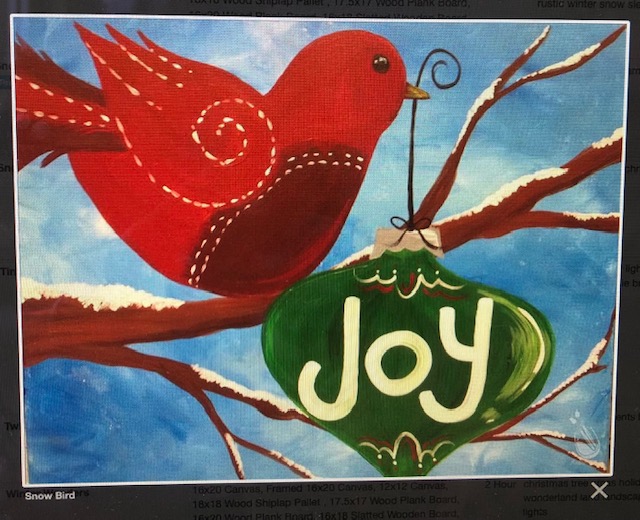
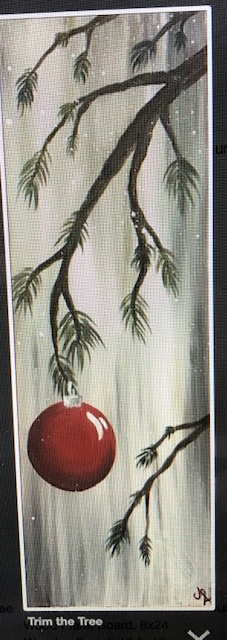
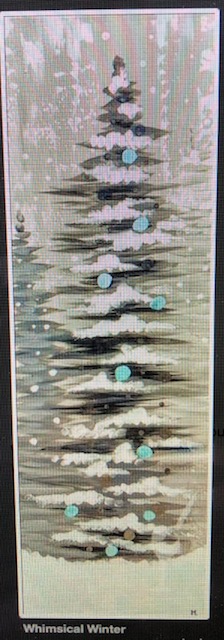
We are organizing a Painting With a Twist party, but they offer several options. Please tell me your top three choices of the following paintings. Also, let me know if you’d be interested in an invitation!

Thank you for your help, and I hope to see you there!

Option 1 – Bulbs of the Season
Option 2 – Christmas Love
Option 3 – Christmas Once More
Option 4 – Christmas Tree
Option 5 – Enchanted Christmas Tree
Option 6 – Holiday Shine
Option 7 – It’s Beginning to Look a Lot Like Christmas
Option 8 – Rustic Merry and Bright
Option 9 – Simple Christmas
Option 10 – Snow Bird
Option 11 – Trim the Tree
Option 12 – Whimsical Winter

This word you keep saying …

I’m a writer and I belong to a critique group. We meet once a week to share our works-in-progress. We listen to each other read and then offer suggestions about how to correct mistakes, or barring that, simply fine tune the craft. It’s the most helpful thing a new author can do for herself. Every writer should join a crit group.

Three months ago, one of my co-authors made a comment about my submission, and I cannot get it out of my mind.

The lady took umbrage at my use of a term she didn’t know. The word in question? Discomposed. She told me she’d never heard it, which is fine. There are lots of words I don’t know. But she went on to say she didn’t think my readers would understand it either. She suggested I change the phrase.

I declined her recommendation, but the idea behind her discontent has bothered me ever since.

I understand her reasoning. I totally get it. The biggest mistake a writer can make, apparently, is to pen something so distracting it “takes the reader out of the story.” The fear is, if this unpardonable sin occurs, the dear reader might decide never to return. There are a lot of easily available distractions in our world today.

But I disagree with part of that train of thought. I think reading can (and should be) a means of learning new things, of broadening our vocabularies. Any time you hear someone mispronounce a word, rest assured, they learned it from reading it. That’s a good thing! I can remember reading 101 Dalmatians as a 10-year-old and being puzzled by the differences in British English vs. American English, although I didn’t realize that’s what it was at the time.

Words like “bachelor flat,” and “trousseau,” and “stacked plates on a lift.”

I was ten. I saw the words “bachelor flat” and my imagination produced something very thin. Trousseau? How do you even pronounce that? A lift? I learned what a dumbwaiter was by reading Harriet the Spy.

When I read The Lacuna, by Barbara Kingsolver, I kept my phone by my side with my Google Translate app open, waiting to type in the Spanish words I didn’t know. I finished the book, by the way.

So, if you want to use a word that pushes your reader to learn something new, go for it. If your writing is entertaining enough, enticing enough, the reader will come back to the story after puzzling over the meaning of the unknown.

Seems like that’s my job as the author. Write a book they can’t put down, and none of this matters.

Follow me on TikTok to hear about the words I run into each day that were previously unknown to me. Share your words with me. We can laugh about how badly we pronounce them.

But at the end of the day, we’ll be smarter than we were at the beginning. And that’s a good thing, too.

https://www.tiktok.com/@paulapeckham?lang=en

Oh, by the way … check out my new book. I am one of five authors who contributed to a Christmas anthology titled Christmas Love Through the Ages. The book is full of sweet, wholesome, Christmas-y stories that will get you in the mood for the holidays. Enjoy!

Friends with benefits

I have a lot of new friends, now that I’m a writer. And those friends come with benefits.

Books.

Lots and lots of books. Books of all shapes and sizes, all genres. And my new friends want me to read their books. Because authors need reviews, and most people won’t take the time to leave them.

But because we, as fellow writers, know how important they are, we do it for each other. And the nice thing for you? You get to hear about books! Lots and lots of them.

So, we start with my good Twitter friend, Cheryl Burman, who wrote Keepers. Such a beautiful story. I highly recommend you take a trip to Australia and fall in love. With Teddy? Or Alph? Hmm. Choices.

Keepers by Cheryl Burman

My rating: 5 of 5 stars


Gorgeous prose, heart-rending love story, keeps you guessing till the end. This book tells the story of Raine and her brave struggle to survive … survive the war, survive her father’s illness, survive when her husband leaves. She has two wildly different men who love her, one she can depend on, one who at one time made her heart soar. Burman keeps you guessing till the very last chapter what Raine does for herself. It is a lovely story of courage, perseverance, and filled with beautiful descriptions of Australia.


View all my reviews